Zollinger–Ellison Syndrome
Zollinger–Ellison syndrome is caused by a gastrin-secreting neuroendocrine tumor called gastrinoma.
Gastrinomas are usually located in the small intestine or pancreas. Excess gastrin causes marked gastric acid secretion, resulting in peptic ulcer disease.
Pathogenesis
Gastrin stimulates the parietal cells of the stomach to secrete hydrochloric acid. It also has a trophic effect on the oxyntic mucosa.
In Zollinger–Ellison syndrome, a gastrinoma produces excessive amounts of gastrin.
Gastrinoma → Hypergastrinemia → Parietal cell hyperplasia → Acid hypersecretion
The increased acid secretion leads to peptic ulcer disease and can also contribute to chronic diarrhea.
Gastrinoma
Gastrinomas may occur as:
- Sporadic tumors – about 75–80% of cases
- Tumors associated with multiple endocrine neoplasia type 1 (MEN1) – about 25% of cases
Sporadic gastrinomas are generally solitary and are commonly located in the pancreas.
MEN1-associated gastrinomas are more often multiple, smaller, and commonly located in the duodenum.
Morphology
The characteristic gastric change is marked thickening of the oxyntic mucosa.
This occurs predominantly because of parietal cell hyperplasia. Hyperplasia of mucous neck cells and endocrine cells may also occur.
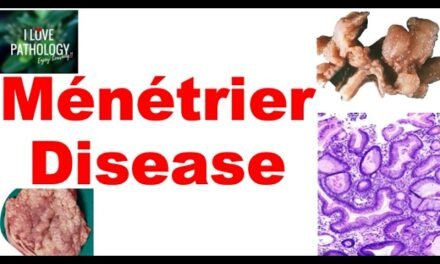
Zollinger–Ellison syndrome and Ménétrier disease are both examples of hypertrophic gastropathies, but the proliferating cell type is different in the two conditions.
Clinical Features
Important manifestations include:
- Peptic ulcer disease
- Marked gastric acid hypersecretion
- Chronic diarrhea
- Rarely, gastric perforation
Zollinger–Ellison Syndrome vs Ménétrier Disease
| Feature | Zollinger–Ellison syndrome | Ménétrier disease |
|---|---|---|
| Main mechanism | Excess gastrin | TGF-α/EGFR signaling |
| Main cellular change | Parietal cell hyperplasia | Foveolar hyperplasia |
| Acid secretion | Increased | Decreased |
| Important manifestation | Peptic ulceration | Protein loss and hypoalbuminemia |
Treatment
The immediate priority is to control gastric acid hypersecretion using proton pump inhibitors. This helps the peptic ulcers to heal and reduces complications.
The underlying gastrinoma should then be localized, evaluated, and treated.
Key Take-Home Points
- Zollinger–Ellison syndrome is caused by a gastrinoma.
- Gastrinomas are neuroendocrine tumors that secrete gastrin.
- Hypergastrinemia causes parietal cell hyperplasia and marked acid hypersecretion.
- Peptic ulcer disease and chronic diarrhea are important manifestations.
- Gastrinomas may be sporadic or associated with MEN1.
- Parietal cell hyperplasia helps distinguish it from Ménétrier disease.
Watch the Video
Want to understand how the different gastric cells are involved, how sporadic and MEN1-associated gastrinomas differ, and how Zollinger–Ellison syndrome can be distinguished from Ménétrier disease?
▶️ Watch the complete ILovePathology video for the detailed explanation and illustrations.