Ménétrier Disease
Ménétrier disease is a rare protein-losing hypertrophic gastropathy characterized by enlargement of the gastric rugal folds.
It is an acquired condition characterized by three important features:
- Hypertrophic gastropathy
- Hypochlorhydria
- Hypoproteinemia due to protein loss
Pathogenesis
Ménétrier disease is associated with increased transforming growth factor-alpha (TGF-α), which activates the epidermal growth factor receptor (EGFR) and stimulates proliferation of the gastric epithelium.
↑ TGF-α → EGFR activation → Foveolar hyperplasia → Giant gastric rugal folds
The disease predominantly involves the body and fundus of the stomach.
Clinical Features
Loss of protein through the abnormal gastric mucosa results in hypoproteinemia.
Patients may also develop:
- Weight loss
- Diarrhea
- Peripheral edema
Peripheral edema occurs due to reduced plasma oncotic pressure associated with hypoalbuminemia.
Gross Appearance
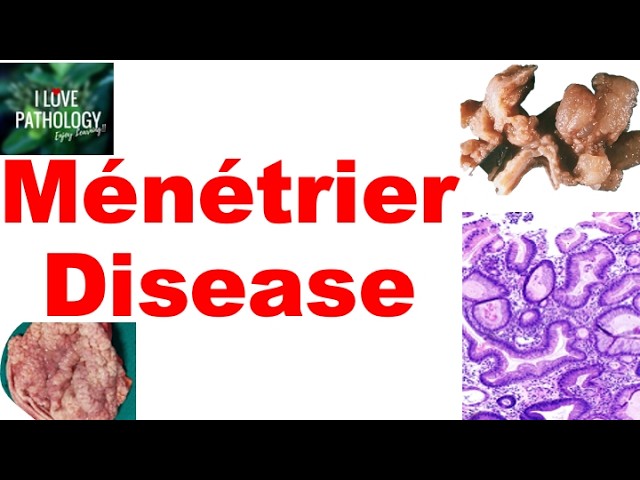
The gastric rugal folds are markedly enlarged and irregular, producing a characteristic cerebriform appearance.
The enlarged folds predominantly involve the body and fundus. They may appear polypoid, while the antrum is generally spared.
Microscopy
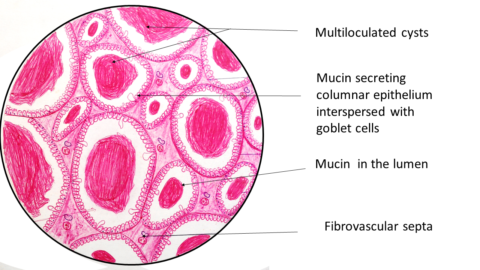
The most characteristic microscopic feature is foveolar mucous cell hyperplasia.
The glands may become elongated, corkscrew-shaped, or cystically dilated.
There is also hypoplasia of parietal and chief cells. Thus, foveolar hyperplasia and oxyntic gland hypoplasia may coexist in the same mucosa.
Inflammation is usually minimal.
Ménétrier Disease in Adults and Children
In adults, Ménétrier disease is associated with an increased risk of gastric adenocarcinoma.
In children, the disease may occur following a viral infection, particularly cytomegalovirus (CMV), and is often self-limited.
Key Take-Home Points
- Ménétrier disease is a protein-losing hypertrophic gastropathy.
- Giant gastric rugal folds are characteristic.
- The body and fundus are predominantly involved, with sparing of the antrum.
- Foveolar hyperplasia is the characteristic microscopic finding.
- Protein loss results in hypoproteinemia and edema.
- Adults have an increased risk of gastric adenocarcinoma.
Watch the Video
Want to understand why the gastric folds become so large and see the gross and microscopic appearances?
▶️ Watch the complete ILovePathology video for the detailed explanation and illustrations.