ALCOHOLIC LIVER DISEASE
Excessive alcohol (ethanol) consumption is a major cause of liver disease and accounts for 5.9% of deaths globally. It leads to death and disability earlier in life than other forms of chronic liver injury.
Three Forms of Alcohol-Induced Liver Injury
-
Steatosis, or fatty change
-
Alcoholic steatohepatitis
-
Fibrosis, which leads to cirrhosis
Pathogenesis
A dose of 80 g of alcohol (six beers or 8 ounces/240 ml of 80-proof liquor [40% v/v]) over one to several days can result in mild, reversible hepatic steatosis.
Daily ingestion of 160 g or more for 10 to 20 years may cause severe liver injury.
However, only 10% to 15% of alcoholics develop cirrhosis, suggesting that additional factors influence the disease’s progression.
Contributing Factors:
-
Gender: Women are more susceptible.
-
Ethnic and genetic differences: Cirrhosis rates are higher for African Americans than for Caucasian Americans.
-
Genetic variations in alcohol-detoxifying enzymes and cytokine promoters.
-
Comorbid conditions such as iron overload, nonalcoholic steatohepatitis, and infection with HCV or HBV increase disease severity.
Understanding the pathogenesis of alcoholic liver disease requires answering three key questions:
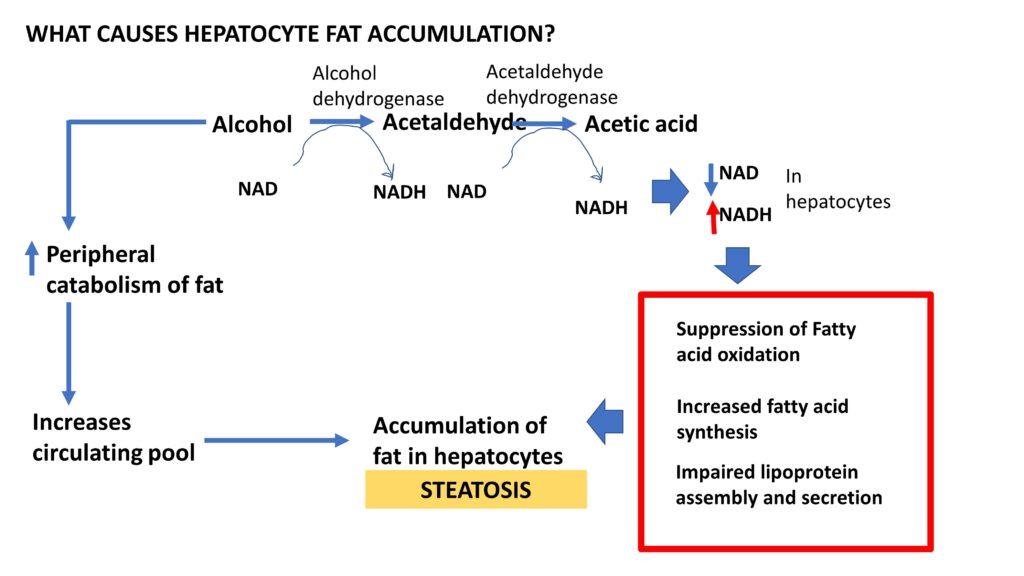
WHAT CAUSES HEPATOCYTE FAT ACCUMULATION?
Alcohol is converted to acetaldehyde and acetic acid by alcohol and acetaldehyde dehydrogenase, respectively. This process leads to decreased NAD and increased NADH in hepatocytes, which:
-
Suppresses fatty acid oxidation
-
Increases fatty acid synthesis
-
Impairs lipoprotein assembly and secretion
Together, these effects cause steatosis, or fat accumulation in hepatocytes. Additionally, alcohol increases the peripheral catabolism of fat, raising circulating free fatty acids that further contribute to hepatic fat accumulation.
As these mechanisms illustrate, alcohol’s metabolic effects set off a cascade of cellular dysfunction. Given the complex interplay of biological and environmental factors in disease progression, addressing alcohol-related liver disease requires more than just abstinence. Many patients benefit from holistic drug rehabilitation, which combines medical treatment with psychological support, nutrition therapy, and lifestyle changes to improve long-term recovery outcomes and reduce relapse rates.
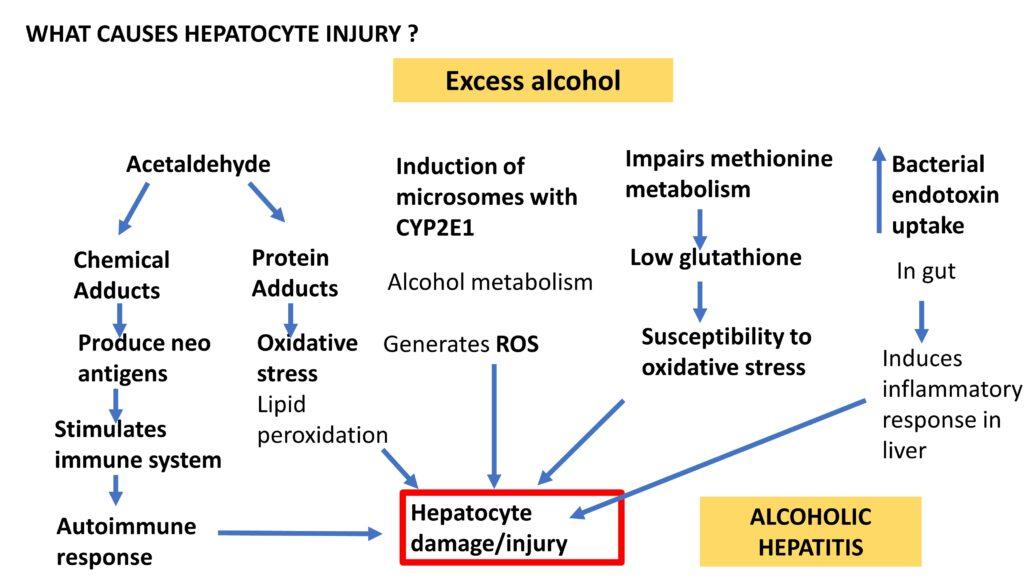
WHAT CAUSES HEPATOCYTE INJURY ?
excess alcohol leads to increase in chemical and protein adducts which stimulates the immune system by producing neoantigens which leads to hepatocyte damage.
Induction of microsomes with CYP2E1 generates ROS leading to hepatocyte injury
excess alcohol also Impairs methionine metabolism resulting in low glutathione, which causes increased suceptibility to oxidative stress leading to hepatocyte injury
Lastly, increased Bacterial endotoxin uptake in the gut Induces inflammatory response in liver leading to hepatocyte injury
The mechanism of hepatocyte injury is illustrated as below
WHAT CAUSES HEPATIC FIBROSIS ?
mainly by Activation of stellate cells! now, How are they activated?
Inflammation of hepatocytes, Kupfer cells, endothelial cells, releases cytokines and chemokines ( TGF-β) thus, Activating stellate cells. These cells are transformed into FIBROGENIC CELLS which leads to deposition of type I & III collagen in lobule resulting in fibrosis.
These cells also have myofibroblast like contractile property which Constrict sinusoidal vascular channels
resulting in Increased vascular resistance and deranged perfusion.
The mechanism is illustrated as below

To view the video tutorial of Pathogenesis of Alcoholic liver disease click below