
What are lymphoid neoplasms?
Lymphoid neoplasms are tumors that arise from B-cells, T-cells, or NK-cells. They form one of the three broad groups of white blood cell cancers, the others being myeloid neoplasms and histiocytosis.
Leukemia vs Lymphoma – What’s the Difference?
-
Leukemia: Involves bone marrow widely and often shows up in the peripheral blood. It’s not always necessary for blood involvement to be obvious, but marrow infiltration is a key feature.
-
Lymphoma: Proliferation of lymphocytes that usually appear as discrete tissue masses, often in lymph nodes or extranodal tissues.
The distinction isn’t absolute. Some lymphomas may spill into the blood and resemble leukemia, while some leukemias can form solid masses. So, the terms mainly reflect the pattern at diagnosis, not strict boundaries.
WHO Classification of Lymphoid Neoplasms
The World Health Organization (WHO) classifies lymphoid neoplasms into four broad categories:
-
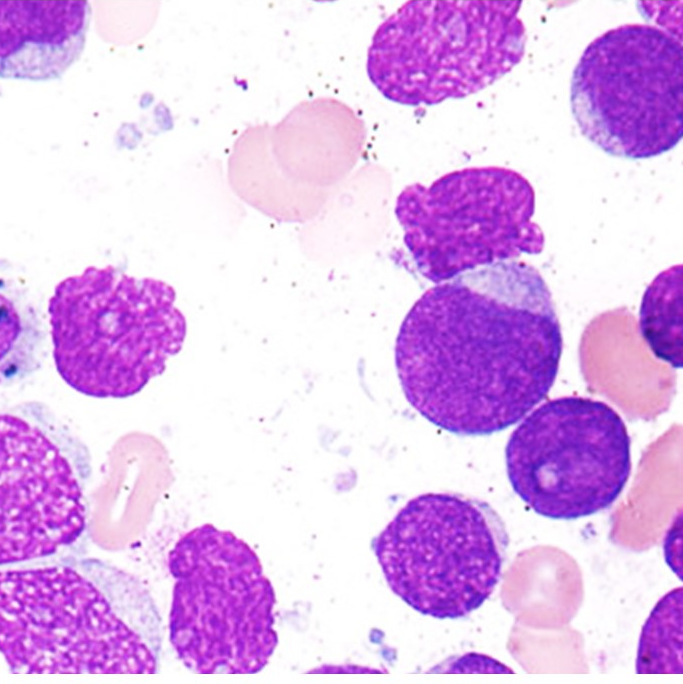
Precursor B-cell neoplasms
-
Example: B-cell acute lymphoblastic leukemia (B-ALL)
-
-
Mature/Peripheral B-cell neoplasms
-
Chronic lymphocytic leukemia (CLL)/Small lymphocytic lymphoma (SLL)
-
Follicular lymphoma
-
Mantle cell lymphoma
-
Marginal zone lymphoma
-
Diffuse large B-cell lymphoma (DLBCL)
-
Burkitt lymphoma
-
Lymphoplasmacytic lymphoma
-
Plasma cell neoplasms (including myeloma)
-
-
Precursor T-cell neoplasms
-
T-cell acute lymphoblastic leukemia (T-ALL)
-
-
Mature/Peripheral T-cell and NK-cell neoplasms
-
Mycosis fungoides
-
Sezary syndrome
-
Anaplastic large cell lymphoma
-
Adult T-cell leukemia/lymphoma
-
Extranodal NK/T-cell lymphoma
-
NK-cell leukemia
-
-
Hodgkin lymphoma
-
Classical Hodgkin lymphoma (4 subtypes, e.g., mixed cellularity, nodular sclerosis, etc.)
-
Nodular lymphocyte predominant Hodgkin lymphoma
-

General Principles of Lymphoid Neoplasms
1. Diagnosis requires more than morphology
Clinical suspicion comes from symptoms and presentation, but the final diagnosis is based on a combination of:
-
Microscopic morphology
-
Immunophenotyping
-
Genetic studies
2. Clonality – a hallmark of malignancy
All neoplastic cells come from a single transformed lymphoid progenitor, meaning they carry the same antigen receptor gene rearrangement:
-
Immunoglobulin genes for B-cell tumors
-
T-cell receptor genes for T-cell tumors
3. Resemblance to stages of maturation
Most lymphoid tumors mimic specific stages of B-cell or T-cell development. This resemblance is the basis for their classification.
4. B-cell dominance
About 85–90% of lymphoid neoplasms are of B-cell origin. T-cell and NK-cell neoplasms are relatively rare.
5. Immunological dysfunction is common
Patients may present with:
-
Immunodeficiency → increased susceptibility to infections
-
Autoimmunity → breakdown of self-tolerance
Interestingly, people with congenital or acquired immunodeficiency (like HIV/AIDS or post-transplant patients) are also at higher risk of developing lymphoid neoplasms.
6. Homing patterns of neoplastic lymphocytes
Neoplastic cells often retain the homing behavior of their normal counterparts.
-
Example: Follicular lymphoma → tends to localize in germinal centers of lymph nodes.
-
Cutaneous T-cell lymphoma → shows a preference for skin involvement.
7. Pattern of spread – Hodgkin vs Non-Hodgkin
-
Hodgkin lymphoma spreads in a stepwise, orderly fashion from one nodal group to the next.
-
Non-Hodgkin lymphomas show unpredictable spread, often involving extranodal sites.
👉 This difference is critical for staging and guiding treatment. Hodgkin lymphoma staging especially depends on its predictable spread.
Key Takeaways
-
Leukemia = marrow and blood involvement; Lymphoma = discrete tissue masses.
-
WHO classification divides lymphoid neoplasms into precursor vs mature B/T/NK neoplasms, plus Hodgkin lymphoma.
-
Diagnosis rests on morphology, immunophenotyping, and genetics.
-
Most lymphoid neoplasms are B-cell derived.
-
Immunodeficiency and autoimmunity are common themes.
-
Hodgkin lymphoma spreads predictably, unlike the more variable non-Hodgkin lymphomas.
Click below to watch the video tutorial on Lymphoid Neoplasms