
Understanding Chronic Myeloid Leukemia (CML): A Simple Guide for Medical Students
Chronic Myeloid Leukemia (CML) is one of the most frequently asked topics in pathology exams—and yes, it can sound intimidating at first. But in this article, let’s break it down together. Whether you’re revising for your exams or trying to get the basics right, this simplified guide will help you understand the pathogenesis, clinical features, diagnosis, and treatment of CML in one go.
CML is a type of myeloproliferative neoplasm that is defined by the presence of the BCR-ABL1 fusion gene. This gene is formed when a part of chromosome 9 (containing the ABL1 gene) fuses with part of chromosome 22 (containing the BCR gene). This abnormal chromosome is famously known as the Philadelphia chromosome.
The BCR-ABL1 fusion results in uncontrolled proliferation of white blood cells, especially neutrophils. As a result, patients typically show marked neutrophilic leukocytosis.
Who Gets CML?
Incidence: About 1–2 cases per 1 lakh population
Gender: Slightly more common in males
Age group: Most often seen in the 5th to 6th decades, but can occur in children and adolescents too
Risk factor: Acute radiation exposure is a known predisposing factor
What Causes CML?
The core reason lies in the formation of the BCR-ABL1 fusion gene, which encodes an abnormal tyrosine kinase protein. Here’s what happens step-by-step:
ABL1 gene (on chromosome 9) normally produces a tyrosine kinase that helps in cell growth, but needs a signal to activate.
BCR gene (on chromosome 22) plays a role in signal transduction, though not fully understood.
In CML, a reciprocal translocation occurs between chromosome 9 and 22.
The result is a mutated tyrosine kinase protein (p210), which is always active—even without a signal.
This constant activation leads to unregulated proliferation of cells, particularly granulocytic and megakaryocytic progenitors.
Interestingly, erythroid precursors are not preferentially proliferated, which explains why anemia is common in CML patients.

Clinical Features of CML
Patients often present with:
Fatigue
Weakness
Weight loss
Loss of appetite
Anemia-related symptoms
Splenomegaly, leading to a dragging sensation or pain in the left upper abdomen
The disease usually begins insidiously and progresses gradually.
Morphological Features and Diagnosis
CML progresses in two phases as per WHO:
Chronic phase
Blast phase (the accelerated phase has been removed from newer WHO classification)

In the chronic phase:
WBC count: High (80,000 to 1.2 lakh per mm³)
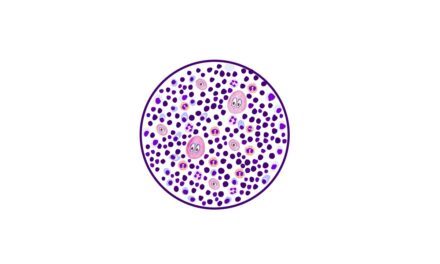
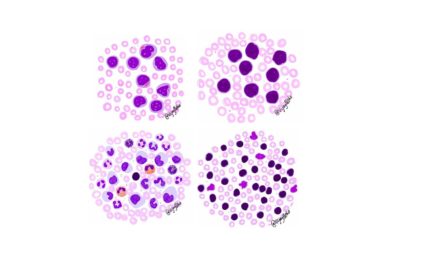
Peripheral smear: Shows neutrophils in various stages of maturation, especially myelocytes and segmented forms
Basophilia and eosinophilia may be present
Bone marrow: Hypercellular with maturing granulocytic precursors
Special feature: Presence of sea-blue histiocytes (macrophages with wrinkled green-blue cytoplasm)

>20% myeloid blasts in blood or marrow, or
Presence of extramedullary blasts (e.g., in liver or spleen), or
Lymphoblasts (even if <10%) in blood or marrow
This phase is essentially a transformation to acute leukemia.
How Is CML Confirmed?
While clinical and peripheral smear findings offer clues, definitive diagnosis requires:
Karyotyping to detect the Philadelphia chromosome
FISH (Fluorescence In Situ Hybridization) or PCR (Polymerase Chain Reaction) to identify cryptic (hidden) rearrangements of the BCR-ABL1 fusion gene in about 5–10% of cases
Treatment of CML
The breakthrough in treatment lies in tyrosine kinase inhibitors (TKIs), specifically targeting the BCR-ABL1 protein.
TKIs like Imatinib can induce remission in over 90% of cases
For young patients, hematopoietic stem cell transplantation during the stable phase can be curative in about 75%
Summary
CML is caused by the BCR-ABL1 fusion gene, usually due to t(9;22) translocation.
The mutated tyrosine kinase causes continuous cell division.
Leukocytosis, splenomegaly, and anemia are hallmark features.
Diagnosis is confirmed by cytogenetics (Philadelphia chromosome) or molecular tests.
TKIs have revolutionized treatment, drastically improving survival and quality of life.
Click below to watch the video tutorial on CML